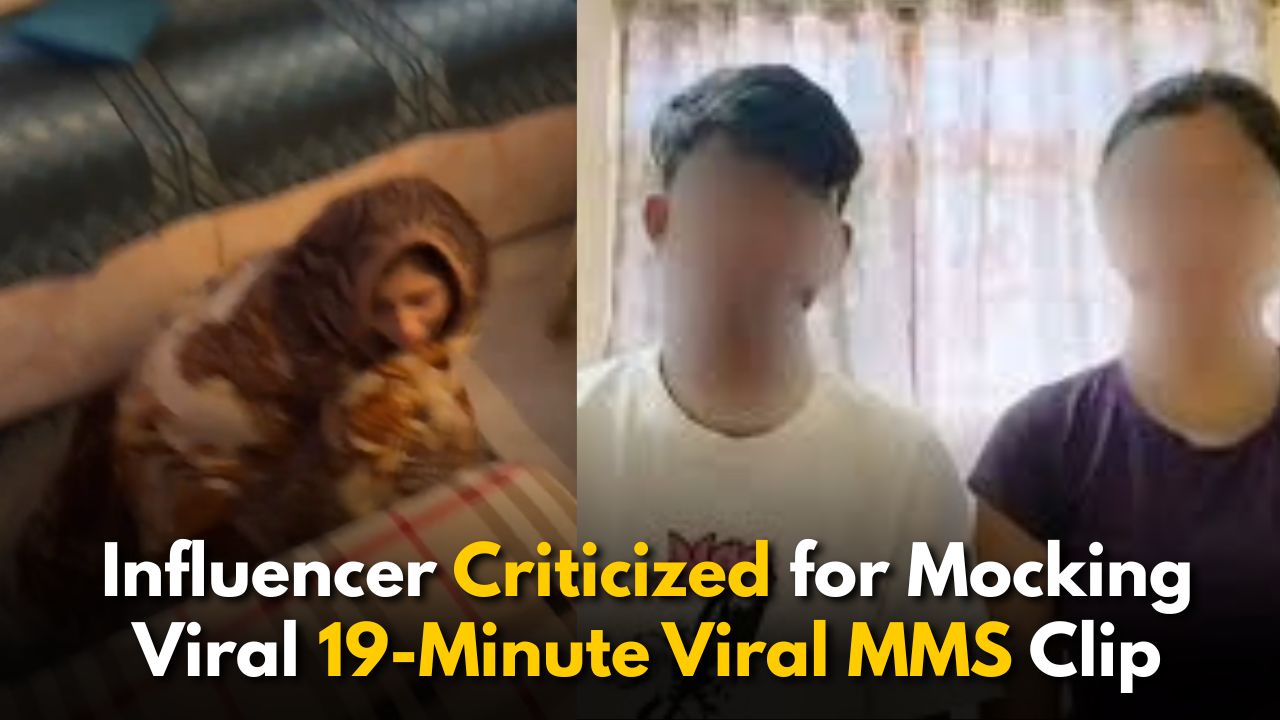


Niharika Sharma’s reel, which called to the much argued 19-minute viral MMS clip ostensibly starring an individual named Sofik, sparked social media outrage. Set for a funny imagined argument on dating, the narrative ended with a suggestive punchline pointing toward the legendary length of the clip. Considering the type of blown intimate material, what appeared to be humor was soon considered as really harsh and offensive.
Viewers called the influencer “tone-deaf” and “unserious,” then inquired how far people were ready to go for views, likes, and engagement throughout the comments. Many voiced annoyance that such delicate privacy breaches were being reduced to the level of casual online jokes. One commenter noted, “Why do people not understand how serious this is?” as anxiety over influencers exploiting live conflicts for content grew.
The criticism received a major lift when another person trivialized the event much more by posting a reel stating she “deserved the guy more than the girl in the video.” For many, hearing this uttered by a lady was particularly horrific; meanwhile, questions of internalized insensitivity and normalization of exploitation for online attention arose.
Beyond the immediate uproar, questions were posed regarding very bigger effects from such material. Many said that anyone today is open to AI-produced explicit videos even if they do not divulge personal information. Once released, it is nearly hard to manage the harm or repair public opinion.
One remark says, “People really don’t care if it’s AI or real.” “All they care about is the fact that someone is being exposed.”
The occurrence has brought renewed discussion on the ethical duty of influencers and the pressing need for empathy in online environments. Many people want artists to rethink transforming another person’s suffering- actual or reported- into content as talks go on.
View this post on Instagram
Also Read: Venu Swamy About Samantha – Raj Nidimoru Future
 Share
Share
 Why Samantha May Have Shared Only a Date- Not the Word ‘Marriage' On Insta
 Rasika Dugal Says She Would Have Rejected Animal