
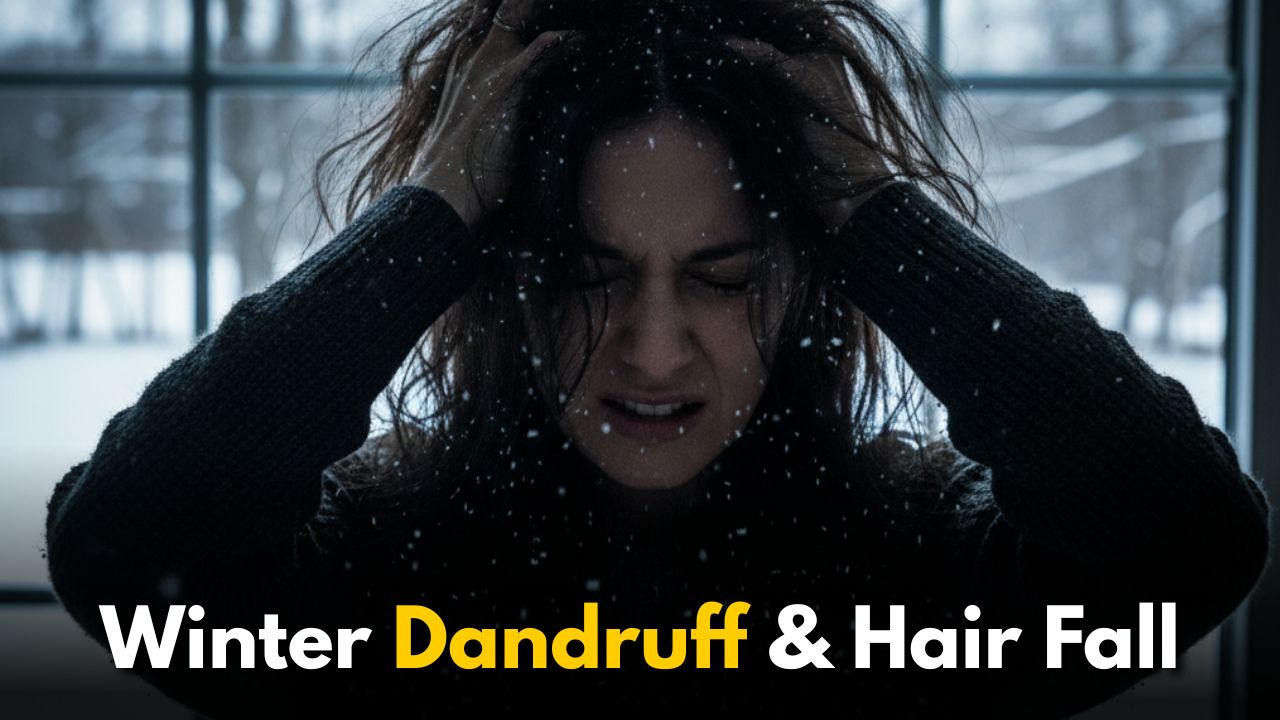


Winter Dandruff: For all those enthusiastic about winter, it brings with it warm cozy sweaters and hot mugs but also takes away this wrestling battle with your scalp that carries on with that season. According to dermatologists, hair fall and dandruff worsen during the cold months, and this is primarily because winter air is extremely dry. It steals all the moisture it comes in contact with, including your precious scalp. With removal of natural moisture, skin becomes dry, flaking, and irritated, forming an ideal ground for causing dandruff as well as increasing shedding.
It is not just bitter cold; winter is also the season of pollution. Dust and pollution float more freely in the air since humidity in drops. When such polluted, dried air settles on the scalp, irritation intensifies in the scalp. Flaking, itching, redness, and inflammation are then triggered by this interaction. This aggravates and, over time, weakens hair roots, followed by increasing breakages and excessive hair loss.
Their majority falls into seasonal hair fall, while the root cause is left unrecognized because it’s a damaged scalp barrier that does its best to get protected from the tormenting weather.
The drying effect of cold air creates a chain reaction of scalp issues:
Flaking: dead skin builds up faster on a dehydrated scalp.
Itching: moisture loss leads to discomfort and irritation.
Inflammation: the environment pollutants further aggravate the scalp.
Breakage: roots dry out and britle strands snap easily.
Shedding: weak roots fall sooner into the shedding phase, leading to increased hair fall.
It is clean, hydrated scalp that makes for healthy hair during winter. Experts advise having a clean scalp and maintaining this through the winter. Hydrating shampoos, mild conditioners, or nourishing oils contribute to restoring the entire balance. The other thing not to do is to put on woolly caps directly on the head; they trap sweat and friction that later worsen the symptoms of dandruff. Make sure you have a cotton layer underneath if it is required.
But most importantly, clean out hot showers. Hot showers strip natural oils on the scalp, thus enhancing dryness and even further feeding dandruff. Rather then hot water, using lukewarm water saves the scalp and hair.
Also Read: UP Teen Builds AI Teacher Robot ‘Sophie’ to Teach Students at His School
 Share
Share
 19 Min 34 Sec Viral MMS: What Really Happened? Complete Breakdown
 iBomma Ravi Case: Warning Police To Remorse Here’s Inside Story Of Immadi Ravi