
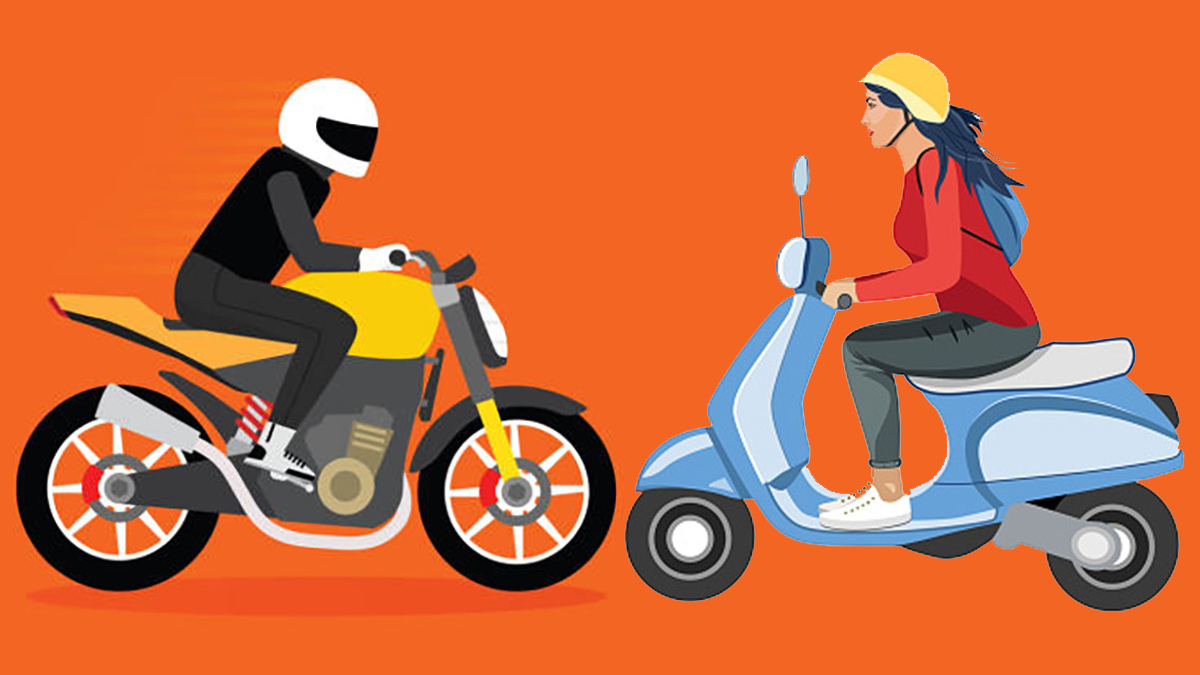


Many people choose scooters for their comfort and convenience, especially for city rides. But when it comes to mileage, most scooters fall behind motorcycles. Even though both run on similar engines, scooters often consume more fuel. Experts explain that the design, engine setup, and transmission system make the difference.
In most scooters, the engine is placed near the rear wheel. This creates extra weight on the back side, forcing the engine to work harder, which increases fuel use. On the other hand, bikes have better balance and aerodynamics. Manufacturers place the engines in the centre to ensure smoother power delivery and better mileage.
CVT (Continuously Variable Transmission) is another major factor is theused in scooters. Unlike manual gears in motorcycles, CVT runs automatically. It keeps the engine in a constant high-rev range to deliver instant pickup, but this also burns more fuel. Motorcycles, with their manual transmission, allow riders to control the gear and speed, which helps save petrol.
Tyre size and wheel diameter also affect fuel efficiency. Scooters have smaller wheels, which increase rolling resistance. Bikes have larger tyres that maintain stability and reduce drag, improving mileage on long routes.
Experts suggest that proper maintenance and smooth driving can slightly improve scooter mileage. Regular servicing, correct tyre pressure, and avoiding sudden acceleration make a big difference. For those who travel long distances daily, a bike is still the better option for fuel savings.
Also Read:Chapped Lips in Winter: Know Why It Happens and How to Prevent It
 Share
Share
 10 Ways to Reconnect With Yourself After a Breakup
 8 Countries Offering Visa Free Travel for Indians in 2025