
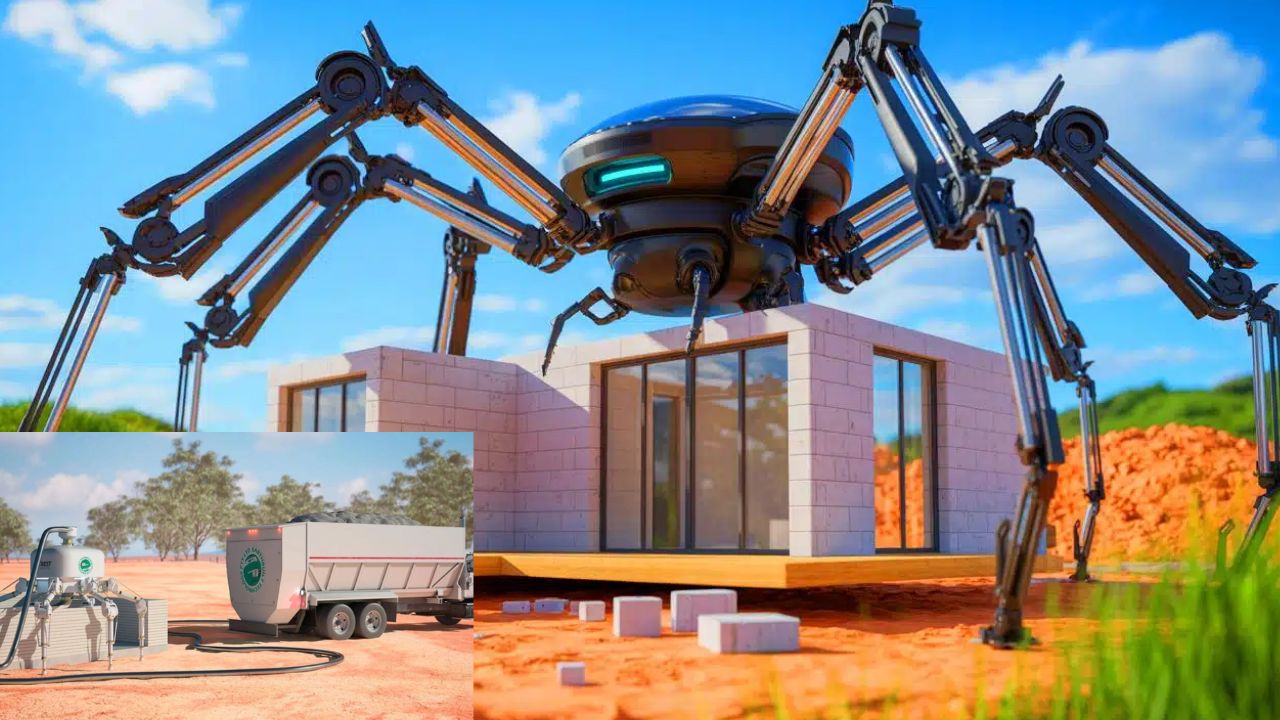


A spider-shaped robot named Charlotte builds houses in one day. This robot works completely autonomously. It constructs walls for 2,150 square foot homes. The system uses local soil and waste materials. No traditional bricks or cement are needed.
Charlotte combines 3D printing with additive manufacturing. It operates as a mobile legged system. The robot handles heavy and repetitive tasks. It works on risky construction sites. This represents construction’s future direction.
The system significantly reduces carbon emissions. Traditional brick production emits substantial carbon. Charlotte uses soil and crushed waste instead. This eliminates cement transportation needs. Construction becomes more sustainable.
A special undercarriage system collects materials. It gathers soil, sand and crushed waste. The system compresses materials with textile binding. It creates strong layered walls. Everything happens on-site automatically.
The technology uses continuous extrusion method. A nozzle releases material in layers. It builds walls gradually and precisely. The process ensures structural integrity. Walls become strong and durable.
Charlotte operates faster than a hundred construction laborers as it can complete assignments in less than 24 hours. The robot takes no breaks and is able to work night and day. Building times are drastically reduced.
The robot’s legged design provides superior mobility as it walks across rugged terrain while wheeled equipment can become stuck. It can approach difficult construction sites and should be able to get anywhere without difficulty.
The technology also reduces building costs. It uses locally available free materials and transforms waste into building products. Labor expenses are dramatically reduced and overall expenses are greatly reduced.
Robots will complete dangerous construction work while minimizing worker injury risks. The risk of repetitive injuries to the worker will be substantially reduced. Construction sites can be safer places to work.
The robot is capable of diverting waste materials into wall systems. Ruined crushed construction waste becomes a potential building material. Soil and sand can become substitutes for concrete. The textile binding can provide strength in building materials. Some materials become re-purposed building materials.
The construction industry will become completely transformed as human jobs diminish. New technical jobs will emerge. The price of building will decrease globally making it more affordable to have housing.
The robot whose name is Charlotte is currently being developed in Sydney. Crest Robotics is leading the development and research. Development and testing are ongoing. Plans for commercial versions are in the works. The future looks bright!
Also Read: Phone Heating Problem Solved Forever! New Wireless Charging Cooler launched
 Share
Share
 10 Most Overcrowded Tourist Destinations in the World
 Front Load vs Top Load Washing Machines: Which One Should You Choose?