

Ferrite Bead:
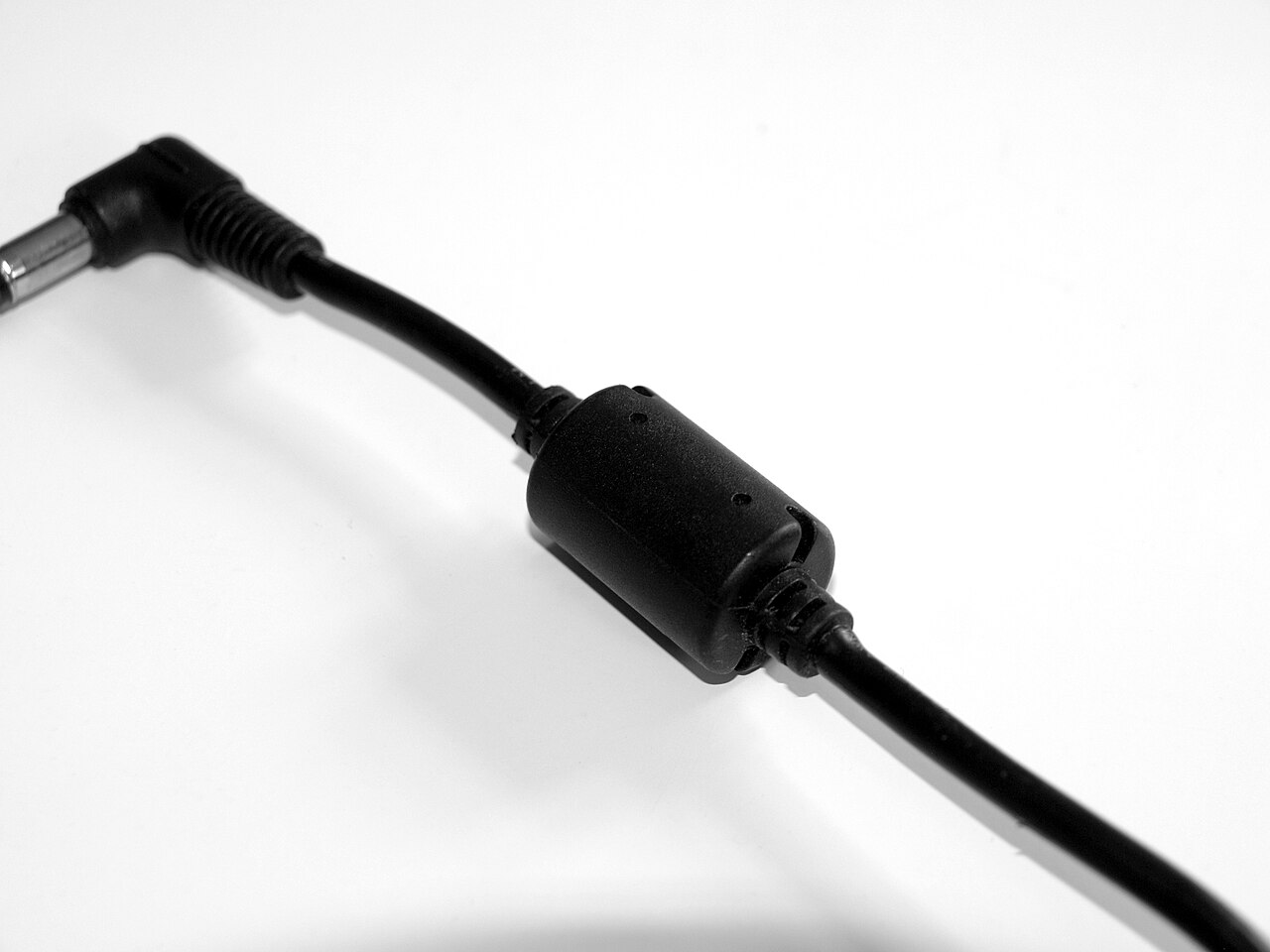
Have you ever noticed the small, round cylindrical piece attached to your charger cable? It’s mostly seen on laptop chargers, but older phone cables had it too. That small black cylinder is called a Ferrite Bead or Ferrite Choke, and it plays a major role in keeping your devices safe from unwanted electrical noise.
What Exactly Is a Ferrite Bead?
A ferrite bead is the black, barrel-shaped component seen near the ends of charging cables. Its job is to block electromagnetic interference (EMI) or electrical noise. When electricity passes through your charger cable, it generates high-frequency waves that can disturb your phone or laptop’s circuits.
This acts like a filter. It absorbs and reduces these unwanted frequencies, ensuring that your device receives clean and stable current. This helps your phone or laptop perform efficiently without signal interruptions.
Many people mistake this part for a fuse but it’s not. Instead of cutting off power, it filters the current, preventing unwanted signals from entering your device.
Why Is It Important for Your Device?
Without a ferrite bead, high-frequency noise can pass through your charger or data cable. This can interfere with your phone’s internal circuits, slow down charging, or even cause your device to switch off suddenly.
The ferrite bead helps maintain stable charging and smooth data transfer by filtering out these signals. It’s like a tiny sound filter protecting your gadgets from invisible noise.
Why Don’t New Chargers Have It Anymore?
Modern chargers and cables are built using advanced circuit filters and shielding technology. These improvements have made external ferrite beads less necessary. However, you can still find ferrite beads in appliances like microwaves, geysers and older laptops where electrical interference is high.
So, the next time you see that small black ring on your charger cable, remember it’s quietly working to protect your devices.
Also Read:Summer In Bethlehem 4K Re-release Date Announced
 Share
Share
 Kaantha Movie Premiere Review: Did it Disappoint?
 Will Bihar Election Results Influence the Market Today?